
Are you dreaming of a warm, inviting outdoor space but stuck with a plain concrete patio? Building a deck over your concrete patio can completely transform your backyard into a cozy retreat where you can relax, entertain, and enjoy the fresh air.
You might think this project is complicated or expensive, but with the right steps, you can create a beautiful deck that suits your style and budget. Ready to learn how to turn that hard, cold surface into a stunning deck?
Keep reading, because we’re about to guide you through every step to make your vision a reality.
Credit: catzinthekitchen.com
Planning Your Deck
Planning your deck is the first step to a successful build over a concrete patio. Good planning saves time and money. It also ensures your deck looks great and lasts long.
Think about the space, materials, and design before starting. This helps avoid problems later. Careful planning makes building easier and more enjoyable.
Assessing The Concrete Patio
Start by checking the condition of your concrete patio. Look for cracks, uneven areas, or damage. A solid, flat surface is important for a stable deck.
Measure the patio’s size accurately. Know the exact length and width. This helps decide how big your deck will be.
Check the patio’s height from the ground. It helps in planning the deck’s height and steps. Also, check if drainage is proper to avoid water problems.
Choosing Deck Materials
Pick materials that fit your budget and style. Common options are wood, composite, and PVC. Wood is natural and affordable but needs care.
Composite and PVC last longer and need less maintenance. They resist rot and insects well. Choose the material that suits your climate and use.
Don’t forget fasteners and supports. Use rust-resistant screws and brackets to keep the deck strong and safe.
Design Considerations
Plan the deck’s shape and layout. Rectangular decks are easier to build. Curved or multi-level decks add style but need skill.
Think about access points like doors and stairs. Place the deck so it connects well to your home. Include space for furniture and movement.
Check local building rules and permits. Some areas have rules about deck height and size. Follow these to avoid fines and problems.
Gathering Tools And Materials
Building a deck over a concrete patio needs careful planning. Gathering the right tools and materials is the first step. This stage helps you work faster and avoid mistakes. It also ensures the deck is strong and safe.
Organize your workspace before starting. Keep tools and materials close by. This saves time and effort during the project. Use a checklist to track everything you need. Check items twice to avoid missing anything.
Essential Tools List
Start with basic hand tools like a hammer and tape measure. A power drill is needed for drilling holes and driving screws. A circular saw helps cut wood to the right size. Level and square tools keep the deck even and aligned. Safety gear such as gloves and goggles protects you while working. A chalk line marks straight cutting lines. Clamps hold wood pieces in place during assembly. A wrench or socket set tightens bolts and fasteners.
Selecting Fasteners And Hardware
Choose stainless steel or coated screws to prevent rust. Use concrete anchors designed for solid patio surfaces. Joist hangers support the deck frame firmly. Galvanized nails resist corrosion in outdoor conditions. Ensure all hardware matches the size of your wood pieces. Avoid regular nails; they can loosen over time. Pick bolts with washers for stronger connections. Proper fasteners keep the deck stable and safe.
Preparing The Concrete Surface
Preparing the concrete surface is a key step before building a deck. It ensures the deck is strong and lasts long. Proper preparation prevents moisture problems and uneven surfaces. This section covers cleaning, leveling, and installing a moisture barrier.
Cleaning And Leveling
Start by removing dirt, leaves, and debris from the concrete. Use a broom or blower to clear the surface. Next, wash the area with a pressure washer or hose. This removes stubborn grime and grease.
Check for cracks or uneven spots on the concrete. Small cracks can be filled with patching compound. Large cracks might need professional repair. Level the surface using a self-leveling compound if needed. A flat base keeps the deck stable and safe.
Installing A Moisture Barrier
Concrete can trap moisture, which damages wood over time. Installing a moisture barrier helps protect the deck structure. Lay a plastic sheet or specialized membrane over the concrete. Make sure it covers the entire area and overlaps at the edges.
Secure the barrier with tape or weights so it stays in place. This layer stops water from seeping up into the wood. A moisture barrier is crucial for a long-lasting deck on concrete.
Building The Frame
Building the frame is the key step in creating a sturdy deck over your concrete patio. The frame holds the whole deck together and supports the decking boards. It must be strong and well-built. Start by planning the layout and gathering the right materials. Use pressure-treated lumber to resist moisture and decay. Measure carefully for a perfect fit.
Laying Out The Joists
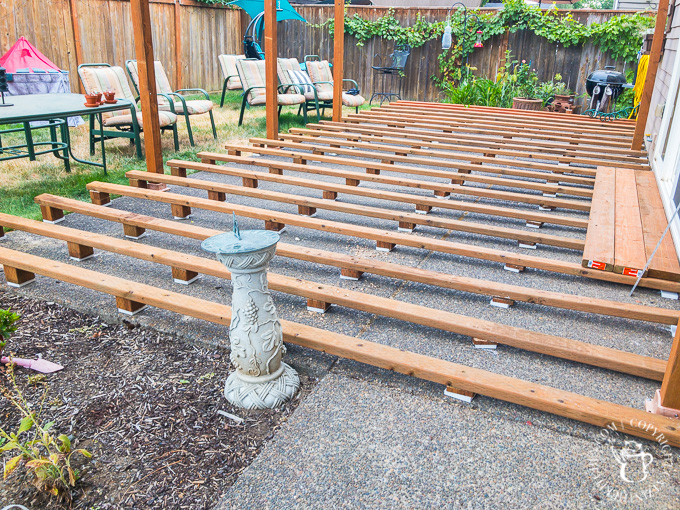
Joists are the horizontal boards that support the deck surface. Begin by marking where each joist will go on the concrete. Space the joists evenly, usually 16 inches apart. Use a chalk line or tape measure for accuracy. Cut the joists to the right length. Place them on the patio and check alignment.
Attaching Joist Hangers
Joist hangers hold the joists in place. They attach to the ledger board and keep joists secure. Select hangers that fit your joist size. Position each hanger at the marked joist locations. Use galvanized nails or screws to fasten hangers. Make sure they are level and tight. This step prevents joists from moving.
Securing The Frame To Concrete
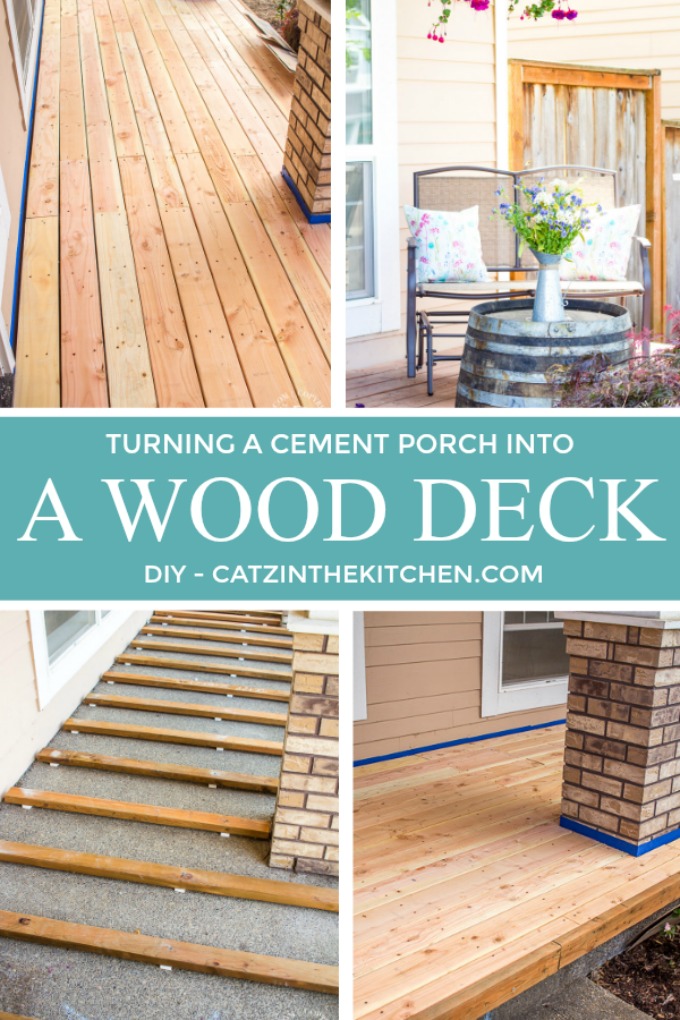
Attach the deck frame firmly to the concrete patio. Use concrete anchors or wedge bolts for strong hold. Drill holes into the concrete at the frame base. Insert anchors and tighten bolts through the frame base. Check that the frame is level and stable. This secures the deck and prevents shifting over time.
Installing Decking Boards
Installing decking boards is a key step in building a deck over a concrete patio. This process turns the frame into a solid, safe surface. Proper installation ensures your deck looks great and lasts a long time.
Careful measuring, cutting, and fastening create a smooth, strong deck floor. Pay close attention to each part. This helps avoid common mistakes that may cause damage or uneven surfaces.
Cutting Boards To Size
Measure the length of your deck area accurately. Mark the boards with a pencil for precise cuts. Use a circular saw or miter saw for clean, straight edges. Cut boards one at a time to maintain accuracy. Double-check measurements before cutting to reduce waste.
Fastening Boards Properly
Choose the right screws for outdoor use, like stainless steel or coated screws. Pre-drill holes to prevent wood from splitting. Secure each board firmly to the joists below. Drive screws straight and flush with the board surface. Keep fasteners consistent for a neat appearance.
Ensuring Even Spacing
Space boards evenly to allow for wood expansion and water drainage. Use spacers or deck clips to maintain a uniform gap. Aim for about 1/8 inch between each board. Check spacing regularly as you work along the deck. Even gaps improve deck durability and look.

Credit: www.youtube.com
Adding Finishing Touches
Adding finishing touches to your deck over a concrete patio makes a big difference. These details improve the look and protect your deck. Taking time for this step ensures your deck lasts longer and looks great. Here are some key finishing tasks to complete your project.
Trimming Edges
Trimming the edges gives your deck a clean, polished look. Use a saw to cut any uneven boards. Make sure all edges line up smoothly. Sand rough spots for a soft finish. Neat edges help prevent splinters and improve safety.
Applying Sealant Or Stain
Sealant protects your deck from water and sun damage. Choose a sealant or stain made for outdoor wood. Apply it evenly with a brush or roller. Let the first coat dry fully before adding a second coat. This step keeps your deck looking fresh and extends its life.
Installing Railings Or Steps
Railings add safety and style to your deck. Use sturdy materials that match your deck’s design. Install railings securely to prevent wobbling. Steps make your deck easy to access. Build steps with even height and depth for comfort. Proper railings and steps complete your deck’s look and function.
Maintenance Tips
Maintaining a deck over a concrete patio keeps it safe and looking good. Regular care stops small problems from growing into big ones. A few simple steps can extend your deck’s life and beauty. Follow these easy maintenance tips to protect your deck.
Regular Cleaning
Clear dirt and leaves from your deck often. Use a broom or leaf blower to remove debris. Wash the surface with mild soap and water. Avoid harsh chemicals that can damage the wood. Rinse well to keep the deck clean and fresh.
Inspecting For Damage
Check the deck for cracks, loose boards, or nails. Look under the deck for signs of rot or insect damage. Repair or replace any damaged parts quickly. Tighten screws and nails that have loosened over time. Regular checks prevent accidents and costly repairs.
Reapplying Sealant
Sealants protect your deck from water and sun damage. Apply a new coat every one to two years. Clean the deck before sealing to ensure good adhesion. Use a brush or sprayer for even coverage. Proper sealing keeps wood strong and prevents warping.
Credit: catzinthekitchen.com
Frequently Asked Questions
How Do I Prepare A Concrete Patio For Decking?
Clean the patio thoroughly and check for cracks or damage. Use a moisture barrier to prevent water buildup under the deck. Ensure the surface is level before starting construction.
What Materials Work Best For Building A Deck Over Concrete?
Pressure-treated wood and composite decking are popular choices. They resist moisture and last longer on concrete surfaces. Use galvanized or stainless steel fasteners to avoid rust.
Can I Build A Deck Directly On The Concrete Patio?
Yes, but you must use a frame with sleepers or pedestals. This raises the deck off the concrete and allows drainage. Avoid direct wood-to-concrete contact to prevent rot.
How Do I Ensure Proper Drainage Under The Deck?
Create space between the deck frame and concrete for water to flow. Use gravel or drainage mats beneath the deck. This prevents water pooling and wood damage.
What Tools Do I Need To Build A Deck On Concrete?
Basic tools include a drill, saw, level, tape measure, and hammer. A concrete drill bit is necessary for anchoring the frame. Safety gear like gloves and goggles is also important.
Conclusion
Building a deck over a concrete patio is a smart way to improve your outdoor space. It adds comfort and style without removing the old patio. Start with a solid plan and choose the right materials. Take your time to measure and secure the frame properly.
This will make your deck strong and long-lasting. With careful work, your new deck will be a great place to relax and enjoy. Simple steps lead to great results. Now, your backyard feels fresh and inviting.