
If you’ve ever admired the timeless charm of a Duncan Phyfe dining table, you’re in the right place. Imagine having a beautiful, handcrafted table that not only adds elegance to your home but also tells a story of classic design.
You might think making one is too hard or expensive, but it doesn’t have to be. In this guide, you’ll discover simple, clear steps to create your own Duncan Phyfe dining table. Whether you’re a beginner or have some woodworking skills, you’ll find tips that make the process easier and more enjoyable.
Ready to build a stunning centerpiece for your dining room? Let’s get started!
Materials And Tools Needed
Building a Duncan Phyfe dining table requires the right materials and tools. Careful selection helps ensure your project turns out well. The wood choice affects the table’s strength and beauty. Proper tools make the work easier and safer. Additional supplies help finish the table smoothly.
Selecting The Wood
Choose hardwood like cherry, walnut, or mahogany for this table. These woods offer durability and a classic look. Avoid softwoods as they may dent or scratch easily. Pick boards with a straight grain for easier cutting. Check for knots and defects to prevent weak spots.
Essential Tools For The Project
Gather basic woodworking tools before starting. A table saw or circular saw is needed for cutting wood pieces. Use a router to shape the table edges and details. Clamps hold pieces firmly while glue dries. Sandpaper or a power sander smooths the surfaces. A drill and screws help join parts securely.
Additional Supplies
Wood glue is important for strong joints. Finish the table with stain or paint to protect the wood. Use brushes or rags for applying finishes evenly. Wood filler can fix small holes or cracks. Safety gear like gloves and goggles protects you during work.
Credit: gatesantiques.com
Design And Measurements
Design and measurements are the foundation of a Duncan Phyfe dining table. Accurate planning ensures the table looks balanced and fits well in your space. This section guides you through identifying key design features and setting precise dimensions. It also helps you create a clear, detailed sketch for your project.
Classic Duncan Phyfe Features
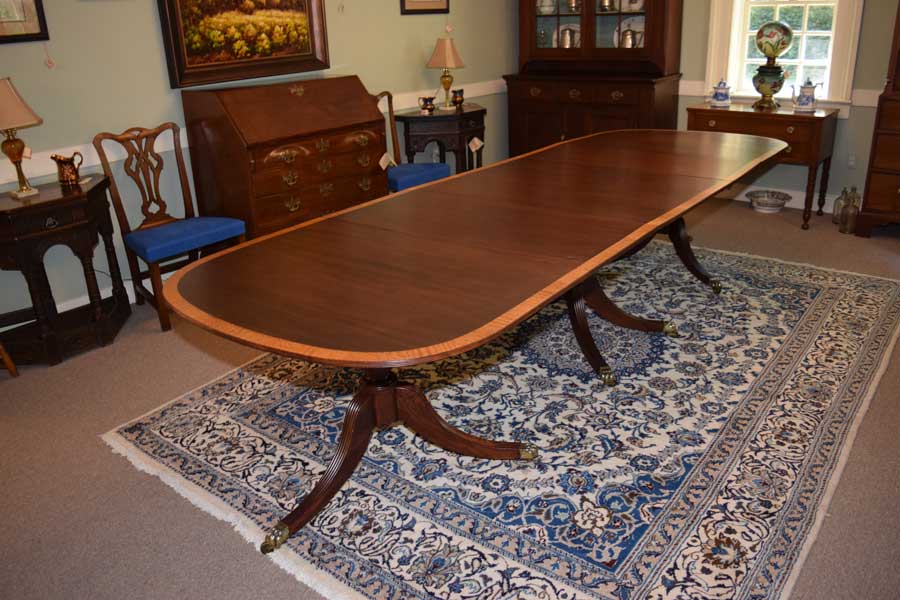
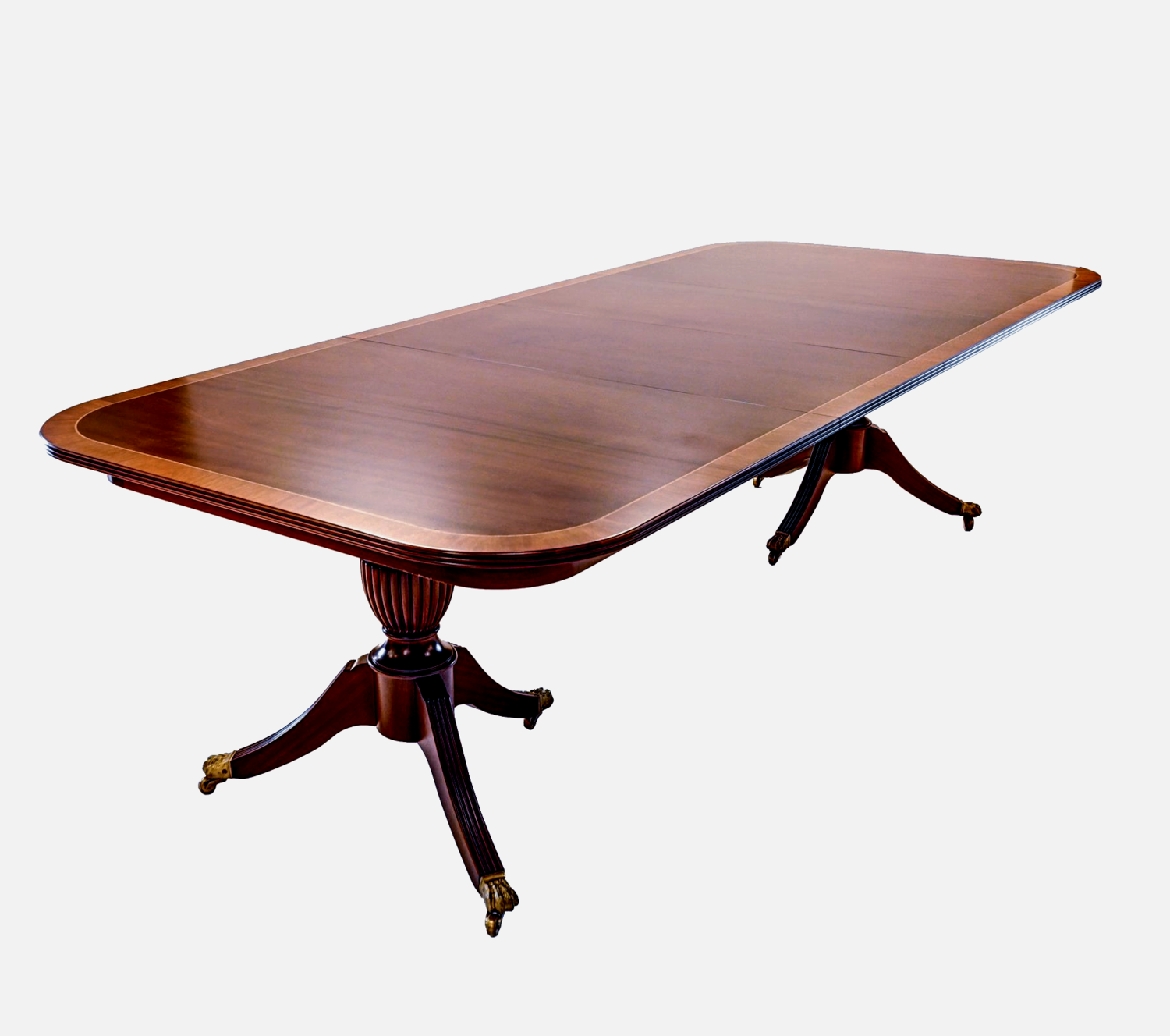
Duncan Phyfe tables are known for their elegant simplicity. They often feature a smooth, round or oval tabletop. The legs are a signature element—curved and tapered, inspired by Greek and Roman styles. Look for the lyre or saber-shaped legs that add a graceful touch. The apron beneath the tabletop is usually plain but sturdy. These classic features give the table its timeless charm.
Determining Table Dimensions
Start by choosing a size that fits your dining area. Standard diameters for round tables range from 36 to 60 inches. Height is usually about 30 inches for comfortable seating. Consider the number of people you want to seat. Allow at least 24 inches of space per person. Also, measure space for chairs and walking around the table. Proper dimensions keep the table functional and inviting.
Creating A Detailed Sketch
Draw a clear, simple sketch before cutting any wood. Begin with the tabletop shape and size. Add the apron, showing its width and thickness. Sketch each leg, focusing on curves and angles. Label all parts with measurements. Use a ruler to keep lines straight. This sketch acts as your roadmap during construction. It helps avoid mistakes and saves time.
Preparing The Wood
Preparing the wood is the first step to making a Duncan Phyfe dining table. The quality of the wood and how it is prepared affects the table’s strength and appearance. Start with good hardwood, like cherry or mahogany. The wood must be cut, shaped, and smoothed carefully. This ensures the pieces fit well and the table looks polished. Take your time to work precisely with each step.
Cutting The Tabletop Pieces
Begin by measuring the tabletop size you want. Mark the wood with a pencil for accuracy. Use a saw to cut the wood into the right shape and size. Cut the main tabletop piece first, then the edges. Make sure all pieces have straight edges for a clean fit. Double-check measurements before cutting to avoid mistakes.
Shaping The Legs
The table legs are a key part of the Duncan Phyfe style. Cut the legs from solid wood blocks. Use a lathe or carving tools to shape the legs with rounded, tapered designs. Take care to keep each leg identical in shape and size. Smooth curves give the table a classic, elegant look. Check the legs often during shaping to maintain balance and symmetry.
Sanding And Smoothing
After cutting and shaping, sand all wood pieces. Start with coarse sandpaper to remove rough spots. Move to finer sandpaper for a smooth finish. Sand the tabletop, edges, and legs thoroughly. Smooth wood helps the stain and finish apply evenly. Clean the wood dust with a cloth before moving to the next step. Proper sanding gives the table a professional appearance.
Assembling The Tabletop
Assembling the tabletop is a key step in making a Duncan Phyfe dining table. This part shapes the main surface where meals are served and memories are made. Careful joining and gluing of wood panels ensure a strong and flat tabletop. Follow these steps for a smooth process.
Joining The Wood Panels
Start by selecting wood panels of the same thickness and type. Lay them side by side on a flat surface. Align the edges closely to avoid gaps. Use biscuits or dowels to connect the panels. These help keep the panels steady and aligned. Check that the grain pattern runs in the same direction for a natural look.
Applying Wood Glue And Clamps
Apply wood glue evenly along the edges of the panels. Spread the glue using a small brush or a finger. Join the panels quickly before the glue dries. Use clamps to press the panels firmly together. Tighten the clamps just enough to hold the pieces without squeezing out all the glue. Let the glue dry for at least 24 hours to ensure strength.
Ensuring A Flat Surface
After the glue dries, remove the clamps carefully. Check the tabletop for any uneven spots. Use a hand plane or a sanding block to smooth the surface. Sand the tabletop until it feels flat and even to the touch. A flat surface is vital for a stable and elegant Duncan Phyfe table.
Crafting The Legs And Base
Crafting the legs and base of a Duncan Phyfe dining table requires care and precision. These parts give the table its strength and classic look. Each piece must fit well and show fine woodworking skills. This section explains the key steps to create sturdy, beautiful legs and a solid base.
Turning The Legs On A Lathe
Start with hardwood pieces for the legs. Mount each piece on a lathe. Use sharp tools to shape the wood smoothly. The legs should have elegant curves typical of Duncan Phyfe style. Keep the shapes balanced and symmetrical. Sand the legs while still on the lathe for a smooth finish.
Creating The Cross Stretchers
Cut straight hardwood bars for the cross stretchers. These bars connect the legs and add stability. Measure carefully to fit between the legs. Shape the ends to fit snugly against the legs. Sand the stretchers to remove rough edges. The stretchers should complement the overall table design.
Attaching Legs To The Base
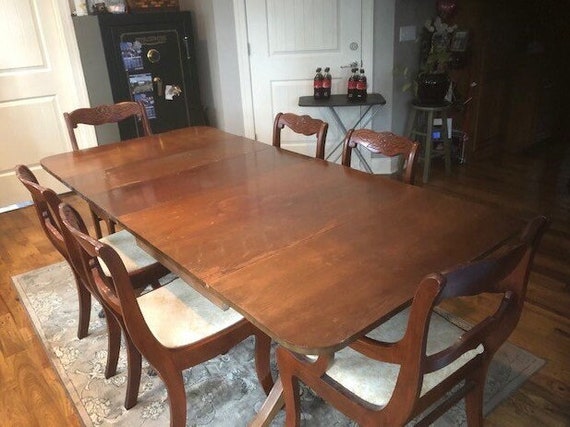
Join the legs to a solid wooden frame that forms the base. Use wood glue and strong screws for a secure hold. Check the legs are vertical and evenly spaced. Fit the cross stretchers between the legs and attach firmly. Ensure all joints are tight and clean for lasting strength.
Credit: www.etsy.com
Final Assembly
The final assembly is the step where your Duncan Phyfe dining table takes shape. This stage brings together all parts crafted earlier. Careful assembly ensures a strong, beautiful table you can use for years.
Focus on joining the tabletop and base securely. Check every connection for firm hold. Then test the table’s stability and balance. A steady table means safe meals and happy guests.
Securing The Tabletop To The Base
Place the tabletop upside down on a soft surface. Align the base with the mounting points under the tabletop. Use bolts or screws to attach the base tightly.
Do not rush tightening. Ensure the screws fit well into the holes. Tighten each screw a little at a time, moving in a pattern. This helps avoid warping the wood.
Double-check all fasteners. They must hold the tabletop firmly without gaps. The tabletop should feel solid and not wiggle.
Checking Stability And Balance
Flip the table upright carefully. Place it on a flat floor. Look for any rocking or uneven legs. Move the table slightly to feel its balance.
If the table rocks, adjust the legs. Use shims under shorter legs if needed. Tighten all screws again after adjustments.
Press down on the tabletop edges. The table should not shift or creak. A balanced table means it will stand firm during use.
Finishing Touches
Finishing touches bring your Duncan Phyfe dining table to life. They protect the wood and show off its beauty. The right finish can highlight the wood grain and give the table a smooth feel. Follow these steps to make your table look its best and last longer.
Staining And Painting Options
Choose a stain that matches the classic Duncan Phyfe style. Dark walnut or cherry stains give a rich, warm look. You can also pick lighter stains for a more modern feel. For a different look, consider painting the table. Soft colors like cream or gray work well. Always test the stain or paint on a small spot first.
Applying Protective Coatings
Protective coatings keep your table safe from spills and scratches. Use polyurethane for a strong, clear finish. Apply thin coats with a brush, letting each dry fully. Sand lightly between coats for smoothness. For a natural look, try a wax finish. It adds shine and feels soft to touch.
Polishing For A Classic Look
Polishing adds the final shine and smoothness. Use a soft cloth and a good furniture polish. Rub gently in circular motions to bring out the shine. Regular polishing keeps the wood healthy and glowing. It also helps prevent dust buildup and small scratches.
Credit: owensuters.com
Frequently Asked Questions
What Tools Do I Need To Make A Duncan Phyfe Table?
You will need wood, saws, chisels, clamps, sandpaper, and wood glue. Measuring tape and a drill are also important. These tools help shape and join the parts accurately.
How Do I Create The Duncan Phyfe Table Legs?
Start by cutting the legs into tapered, round shapes. Use chisels to add the classic reeded details. Sand them smooth before attaching to the table top.
What Type Of Wood Is Best For This Table?
Hardwoods like cherry, mahogany, or walnut work best. These woods are strong and show fine grain patterns. They give the table an authentic, classic look.
How Long Does It Take To Build This Dining Table?
Building can take several days to a few weeks depending on skill. Allow time for cutting, shaping, sanding, and finishing. Patience ensures a sturdy, beautiful result.
How Do I Finish The Table For Durability?
Apply wood stain to bring out the grain color. Then use a clear varnish or polyurethane for protection. This finish keeps the table strong and looking good over time.
Conclusion
Building a Duncan Phyfe dining table takes patience and care. Follow each step slowly and carefully. Use the right tools to get the best results. Enjoy the process of creating something classic and strong. This table will add charm to your home.
It shows your skill and style clearly. Keep practicing to improve your woodworking skills. Now, you have a beautiful, hand-made piece to treasure.