
If you want happier hens and more eggs, building nesting boxes on the outside of your coop is a smart move. Not only does it save space inside, but it also makes collecting eggs easier and cleaner for you.
You might be wondering how to create sturdy, safe, and comfortable nesting boxes without spending a fortune or turning your coop into a complicated project. This guide will walk you through simple, step-by-step instructions that anyone can follow. By the end, you’ll have a practical setup that keeps your chickens content and your daily chores quick and hassle-free.
Ready to get started? Let’s dive in!
Choosing The Right Location
Choosing the right location for nesting boxes outside the coop is key to your hens’ comfort and safety. A well-placed box encourages hens to lay eggs in a safe spot. It also makes egg collection easy for you. Consider a spot that protects hens from harsh weather and predators. The location should be quiet and calm to keep hens relaxed.
Factors To Consider
Pick a place shielded from wind and heavy rain. Too much sun can make the boxes hot and uncomfortable. Find a spot with some shade during the hottest parts of the day. Avoid areas near noisy machines or busy pathways. Hens prefer calm and quiet places to lay eggs. Make sure the ground is level to keep the boxes steady. Check for good drainage to prevent water buildup.
Optimal Height And Position
Mount the nesting boxes about 2 to 3 feet off the ground. This height keeps eggs safe from pests and dirt. Position boxes where hens can easily reach them. Avoid placing boxes too high or too low. Boxes should face away from strong winds. The entrance should be easy to access but offer some privacy. A spot with natural light helps hens feel secure. Proper height and position make hens comfortable and protect eggs.
Selecting Materials
Choosing the right materials for building nesting boxes outside your chicken coop is important. Good materials make boxes strong and long-lasting. They also keep hens safe and comfortable. Select items that resist weather and pests. This helps the boxes last through all seasons. Use materials easy to clean and maintain. Start with basics and add extras if needed.
Wood Types And Durability
Wood is a popular choice for nesting boxes. Cedar resists rot and insects well. It lasts long without chemicals. Pine is cheaper but less durable. Treat pine with safe wood sealant for protection. Avoid pressure-treated wood. Chemicals can harm chickens. Use smooth wood to avoid splinters. Make sure wood is thick enough to hold weight. Choose wood that handles outdoor weather changes.
Necessary Tools And Supplies
Gather tools before starting the project. You will need a saw to cut wood pieces. A drill helps with making holes and attaching screws. Use screws instead of nails for stronger joints. Sandpaper smooths rough edges for safety. Hinges and latches allow easy access to boxes. Use waterproof wood glue for extra hold. Wear gloves and safety glasses during work. Keep measuring tape handy for precise cuts.
Designing The Nesting Boxes
Designing nesting boxes on the outside of your chicken coop requires careful planning. The right design keeps hens comfortable and safe. It also makes egg collecting easier. Consider size, ventilation, and drainage for the best results.
Size And Dimensions
Nesting boxes should be big enough for hens to enter and turn around. A good size is about 12 inches wide, 12 inches tall, and 12 inches deep. This size fits most hens comfortably. Space the boxes so hens don’t crowd each other. Usually, one box per four to five hens works well.
Ventilation And Drainage
Ventilation helps keep the nesting box dry and fresh. Small vents near the top allow air to flow. Avoid drafts that can chill the hens. Drainage prevents water from pooling inside the box. Slightly tilt the floor or add small holes to let water escape. This keeps the bedding dry and eggs safe.

Credit: www.thegardencoop.com
Building The Frame
Building the frame for nesting boxes outside the coop is the first key step. A strong frame holds the boxes safely. It must fit well on the coop’s side. Use good wood that lasts in weather. Plan the size based on how many chickens you have. A well-built frame keeps the nesting boxes steady and secure.
Cutting And Assembling Wood
Start by cutting wood pieces to size. Use a saw for straight cuts. Measure twice to avoid mistakes. Cut pieces for the sides, top, and bottom. Lay them flat and check all parts fit. Join pieces with nails or screws. Make sure corners are square and tight. A solid frame needs tight joints.
Reinforcing For Stability
Add extra support to keep the frame strong. Use small wooden blocks at corners. Attach diagonal braces to stop wobbling. Check the frame does not move when pressed. Reinforcement helps the frame hold heavy nesting boxes. This step makes the frame last longer outdoors.
Attaching The Nesting Boxes To The Coop
Attaching the nesting boxes to the outside of your chicken coop improves space and access. It keeps the boxes separate but close to the coop, making egg collection easier. Proper attachment ensures the boxes stay secure and safe from weather and predators.
Mounting Techniques
Start by choosing a sturdy wall on the coop for the boxes. Use strong brackets or wooden cleats for support. Screws work best to hold the boxes firmly in place. Check the boxes for level before tightening screws. Leave enough space for chickens to enter and exit comfortably.
Hinged mounting is useful for easy cleaning. Attach the boxes with hinges on one side. This lets you open the box like a door. It saves time and keeps the coop tidy.
Sealing And Weatherproofing
Seal all edges where the boxes meet the coop. Use outdoor silicone caulk to block rain and drafts. Paint the boxes with weatherproof paint or wood sealer. This protects the wood from moisture and rot. Add a small roof or overhang above the boxes. It shields the openings from rain and snow.
Check seals regularly and reapply sealant as needed. Proper weatherproofing helps keep eggs dry and the coop clean.
Adding Finishing Touches
Adding finishing touches to your nesting boxes makes them practical and comfortable for hens. These details help keep eggs safe and the coop clean. Small changes can improve the hen’s laying experience. Focus on easy access and comfort.
Installing Lids Or Doors
Attach lids or doors to protect eggs from predators and weather. Use lightweight materials for easy opening. Hinges work well for smooth operation. Secure locks keep unwanted animals out. Make sure lids fit snugly to prevent drafts. Lids also make cleaning simpler and faster.
Adding Bedding And Accessories
Place soft bedding inside the boxes for comfort. Straw or wood shavings work best. Bedding absorbs moisture and keeps eggs warm. Add a small perch or divider for more space. This helps hens settle in and reduces egg breakage. Keep bedding clean by changing it regularly.
Maintenance Tips
Maintaining nesting boxes on the outside of your coop is key to keeping hens healthy. Proper care stops pests and keeps eggs clean. Simple routines save time and effort in the long run.
Cleaning Routine
Clean nesting boxes every week. Remove old bedding and droppings. Use mild soap and water to scrub surfaces. Rinse well to avoid chemicals near hens. Dry completely before adding fresh bedding. Fresh straw or wood shavings keep boxes comfy and dry. Clean boxes reduce smell and stop bugs.
Repairing And Upgrading
Check boxes for cracks or loose parts often. Fix small damages quickly to prevent bigger problems. Tighten screws and replace worn wood. Sand rough edges to protect hens from cuts. Add simple upgrades like a hinged lid for easy access. Better ventilation helps keep nests dry. A small roof or cover can protect from rain and sun.

Credit: www.thegardencoop.com
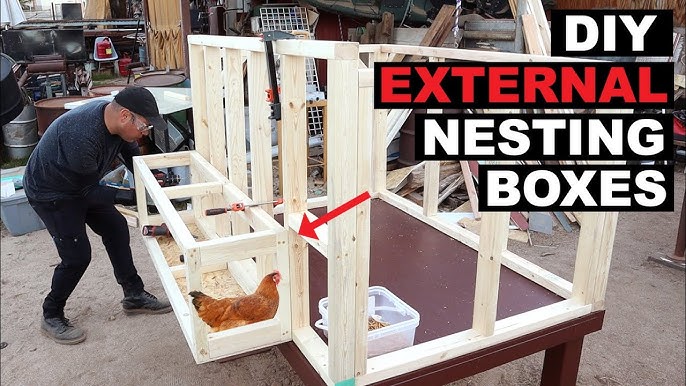
Credit: www.youtube.com
Frequently Asked Questions
What Materials Are Best For Building Outside Nesting Boxes?
Use weather-resistant wood like cedar or pine to build nesting boxes. These woods last long and keep moisture out. Avoid softwoods that rot quickly outdoors.
How Do I Attach Nesting Boxes To The Coop Exterior?
Secure nesting boxes with screws or strong brackets to the coop’s frame. Make sure they are stable and level. Use rust-proof hardware for durability.
How Large Should Outdoor Nesting Boxes Be For Chickens?
Nesting boxes should be about 12 inches wide, 12 inches tall, and 12 inches deep. This size fits most hens comfortably. Space inside helps hens lay eggs easily.
How To Keep Outside Nesting Boxes Clean And Dry?
Add a hinged lid or removable top for easy cleaning access. Use straw or wood shavings for dry bedding inside. Clean boxes regularly to prevent pests and odors.
Can Outdoor Nesting Boxes Protect Eggs From Predators?
Yes, build boxes with secure doors or lids to keep predators out. Place boxes off the ground if possible. Adding locks or latches improves egg safety.
Conclusion
Building nesting boxes on the outside of your coop saves space inside. It also makes cleaning and egg collecting easier. Use simple tools and materials for quick setup. Ensure the boxes are secure and weatherproof to protect your hens. Keep the design comfortable so hens feel safe laying eggs.
Regular checks help keep the boxes clean and dry. This simple addition can improve your chicken-keeping experience significantly. Give it a try and see the benefits yourself.